
Binance is one of the most popular crypto exchanges in the world. It offers extremely low transaction fees and a large selection of digital assets for trade globally. While its vast coin selection might be appealing, the platform’s trading options are limited in the U.S., and it is currently under investigation for some regulatory issues.
Binance Overview
Binance is a cryptocurrency exchange created in 2017 by Changpeng Zhao (aka C.Z.), a Chinese-Canadian developer. After a successful $15 million ICO, Zhao’s firm, Beijie Technology, created the exchange. Binance relocated its headquarters from China to the Cayman Islands in response to the Chinese government’s increased control of the cryptocurrency sector.

Beijie Technology and its founder have a long and successful history in the crypto industry. Zhao’s background includes high-profile roles like the technical director at Blockchain.com, and his firm currently supplies trading systems for over 30 additional platforms.
Since its debut, Binance has been an enormous success. It now holds the top spot on Coinmarketcap in terms of the 24-hour trading volume. Its 24-hour trading volume is often more than five times that of its nearest competitor, Coinbase.
Binance Coin (BNB) was issued to investors who participated in the ICO. BNB is the native utility token of Binance, and it’s used to pay for transaction fees. BNB also powers Binance Smart Chain, formerly known as BNB Chain. BNB’s initial value was roughly $0.10 at launch and has continued to climb in value as Binance and the BNB chain have grown in popularity. When writing this article, Binance Coin (BNB) was priced at $226.40 per coin.
Binance now hosts its servers from more liberal jurisdictions, allowing it to run a competitive exchange business despite its issues with the Chinese government’s stance on cryptocurrencies.
Pros of Binance
- Low fees: The platform has low costs, which means that traders can keep more of what they invest and make.
- Over 600 coins are available on the global platform: A massive selection of over 600 coins are available for trading for Binance’s international users.
- Over 65 assets that U.S. customers can trade: Binance lets U.S. customers trade more than 65 different coins. This feature gives people who trade or invest in crypto many choices.
- Wide selection of options to cater to different trading styles: Binance offers a wide range of trading options and order types, such as peer-to-peer trading, spot trading, and margin trading.
- It also lets you place many kinds of orders, such as a limit order, a market order, a stop-limit order and etc. However, some of these choices, like margin trading, are not available to customers in the U.S.
Cons of Binance
- Complicated platform: The extensive array of services and trading features on Binance may be both thrilling and daunting. Even seasoned traders may feel overwhelmed by all the available options.
- U.S. version is more limited than the international version: Binance provides hundreds of coins for international crypto trading. However, its marketplace for U.S. consumers is more limited. Furthermore, Binance US is only accessible in 44 states.
- Regulatory issues in several countries: Due to the numerous regulatory and legal challenges that Binance has encountered in many countries, cryptocurrency investors may wish to consider using other exchanges.
- No built-in digital wallet available: Binance does not offer a built-in digital wallet, unlike other major exchanges. It promotes Trust Wallet, which has a solid reputation but may provide little help in the event of Binance transfer troubles.
Features Highlight
Over 600+ different cryptocurrencies to buy, sell or trade:
Binance has one of the broadest offerings of cryptocurrencies accessible anywhere in the world. Now it has over 600 different cryptocurrencies available. As the largest cryptocurrency exchange in the world by trading volume, you can expect the liquidity to be strong, allowing you to buy and sell any coin on its platform quickly.
Robust Android and iOS Trading Platforms:
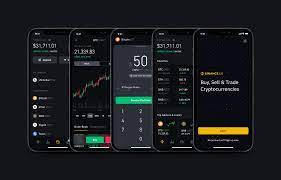
Binance has a superb mobile app that is user-friendly for novices and advanced traders. Two versions of the trading platform can be toggled with the press of a button: Binance Lite, ideal for beginners, and Binance Pro, which provides access to several advanced functions and trading instruments. According to the Google Play store, the Binance app has been downloaded over 10 million times and has received a high rating of 4.4 stars from 319 000 user reviews.
Binance Earn:
Binance gives you many options to make your crypto holdings grow on the exchange. This feature could be a good investment opportunity if you want to HODL your cryptocurrency. You might as well put it to work instead of just letting it sit there.
Binance Loan:
Binance Loan is available to any user who has registered with the platform. There are general loan terms, including 7, 14, 30, 90, and 180 days, with the option to repay the loan early and only be charged for the hours borrowed. Hourly interest is determined at a rate of 0.001667 % every hour (0.04 % per day).
Binance Visa Card:
Binance has teamed up with Visa to offer a credit card that lets you spend your cryptocurrency at more than 60 million stores worldwide. The card is free, and there are no administrative or processing fees. You can also get up to 8% cash back on qualifying purchases. This is a big step in the right direction for cryptocurrencies to become widely accepted.
Trade Futures and Derivatives:
Binance Futures is a relatively new feature that allows users to speculate on the price of Bitcoin and altcoins such as Ethereum, Ripple, Litecoin, Bitcoin Cash, and others. When trading futures, users do not actually purchase or sell cryptocurrencies but instead profit from the increase or decline of the price.
The Binance platform for futures trading is fairly similar to the spot trading interface. The main changes are letting traders use leverage to open positions. Binance Futures also imposes a maximum charge of 0.04 % on every trade. Fees are reduced for traders with high monthly trading volumes or whose transactions often boost liquidity in the order book before execution.
Margin Trading with Up to 10x Leverage:
Margin trading is only available for a few trading pairs, with some pairs allowing users to leverage up to 10x. Cross margin trading is extremely dangerous since it puts your whole account at risk, whereas isolated margin trading merely puts the trading pair with an open position at risk.
P2P Exchange:
Because Binance operates a peer-to-peer, or P2P, exchange, it enables users in virtually any region to trade cryptocurrencies directly.
SEPA/Wire transfers:
Binance’s consumers may now purchase cryptocurrencies directly using SEPA and bank transfers, thanks to partnerships with additional third-party companies. This approach is particularly appealing because SEPA and wire deposits incur no transaction fees. On the downside, this payment method is limited to a few fiat currency choices, including EUR and GBP. Wire transfers are available for USD, TRY, and BRL.
NFT Marketplace:
Binance has jumped on the NFT bandwagon, a move that will surely gain traction soon. A new NFT marketplace has been launched on Binance, where you can mint, buy and sell NFTs.
Trading Experience
Binance Trading Platform Trading on Binance is relatively easy and user-friendly. There’s an impressive cryptocurrency selection available for trading, in conjunction with Bitcoin, Ethereum, Binance Coin, XRP, TRX, DOGE, DOT, BUSD, and Tether trading pairs.
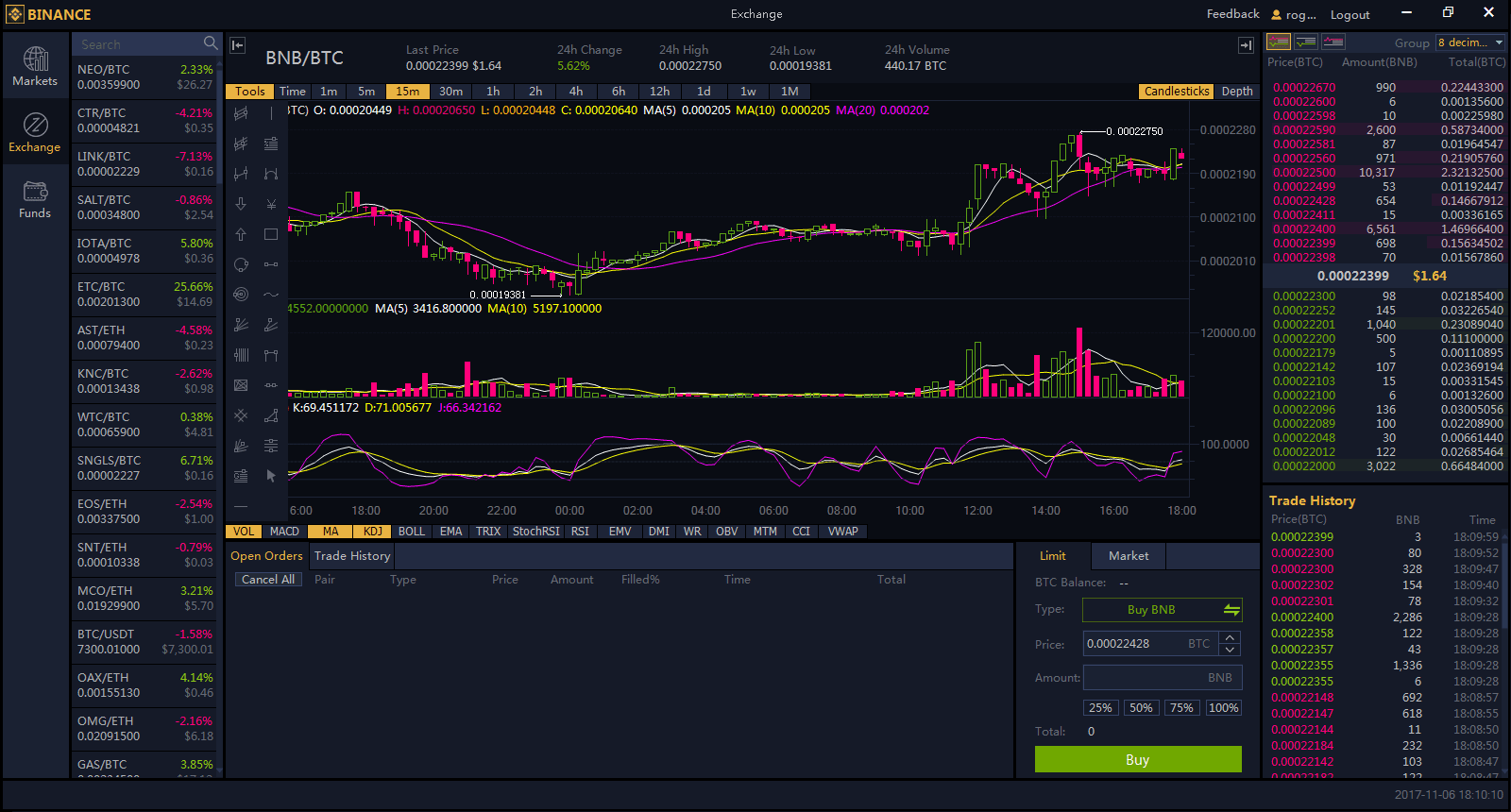
There is also a large selection of crypto-to-fiat pairs available on Binance’s fiat markets. Users can choose between a beginner-friendly or advanced trading interface to manage their crypto portfolio, catering to all types of users. The platform offers margin, derivatives, peer-to-peer, and OTC trading options.
Spot Trading:
Users can choose between two major trading platforms for spot trading. The “Convert” interface is the choice for new traders, as it lacks advanced features like charts and order types. This makes it simple for beginners to trade cryptocurrencies at market prices without complications. The default spot trading interface provides access to charts, order books, and several order types. This mode is recommended for experienced users.
Margin Trading:
Some trading pairs support margin trading, allowing users to trade up to 10x leverage on these positions. Cross margin exposes your whole margin account balance to risk, whereas isolated margin confines your possible losses to a single trading pair. One thing to note, Binance US users do not have access to margin trading.
Binance Futures and Derivatives:
Binance Futures, established in 2019, allows traders to speculate on the price of Bitcoin and other major cryptocurrencies as opposed to buying and selling them.
The platform permits leveraged trading of up to 20x, allowing traders to multiply their earnings (and losses) by a factor of 20. Binance Futures balances are stored separately from regular trading accounts and must be collateralized using Tether (USDT).
The user interface for Binance Futures is identical to the interface for Binance spot trading, except for a few additional functionalities for modifying leverage and monitoring open positions.
The highest trading fee charged on Binance Futures is 0.04 %, somewhat higher than the spot markets’ trading fees. Fees are reduced for “maker” transactions (those that increase liquidity to the order book prior to execution) and for traders with high monthly trading volumes.
Under a feature called “Coin Futures,” Binance also provides futures collateralized with non-stablecoin cryptocurrencies like Bitcoin or altcoins.
In addition, Binance enables the trading of derivatives known as “Leveraged Tokens,” which give UP and DOWN contracts on the price of particular cryptocurrencies. These provide leveraged exposure to cryptocurrencies without the customer’s liquidation risk.
Unfortunately, Binance has been ordered to discontinue derivative trading in several European nations, starting with Germany, Italy, and the Netherlands and, more recently, expanding to the United Kingdom and Spain.
This move is the result of pressure from international authorities, primarily European officials, who have determined that Binance is not permitted to offer investment services. As a result, the exchange has had to suspend providing new consumers services and reduce usage among current customers.
Binance Financing
Crypto Loans
Binance Loans provide customers with lending with collateral by some of the most valuable tokens, such as BTC, ETH, and ADA. This facilitates the exchange of stable coins such as USDT, BUSD, and USDC while preserving exposure to your cryptocurrency holdings and evading the taxable event of selling crypto.
Binance Savings
Savings account types such as “flexible” and “locked” allow consumers to earn a return on idle digital assets. Locked savings accounts pay a greater interest rate on fixed-term deposits than flexible savings accounts.
Binance also offers a staking service that enables users to earn returns on proof-of-stake and decentralized finance (DeFi) currencies. Similar to savings accounts, there are flexible and locked choices for the staking service.
Binance Liquid Swap
Like Uniswap, Binance Liquid Swap is an automated market-maker (AMM) platform based on a liquidity pool. There are two tokens in each pool, and the price difference is determined by the proportional quantity of tokens in each pool.
For large transactions, Liquid Swap offers more dependable rates and cheaper costs. On Liquid swap, users may trade currencies with low slippage or supply liquidity in exchange for a portion of transaction fees.
The primary distinction between Binance Liquid Swap and Uniswap is that Liquid Swap is a centralized exchange while Uniswap is decentralized.
Binance Smart Pool
The Binance Smart Pool lets crypto miners participate in a broader mining pool that divides the earnings. Hash power is automatically diverted to the most profitable cryptocurrency to mine at any given time, allowing users to optimize automatically.
Binance Visa Card
The Binance Visa Card allows users to spend their cryptocurrency assets at retailers, even the locations that accept only fiat currency through credit or debit cards. When you make a purchase, your cryptocurrency coins will be converted to fiat at no cost so that you do not need to maintain money on hand. The card is free, with no administration or processing fees, and allows you to earn up to 8% cashback on qualifying transactions.
Binance Fees
Binance Deposit Fees
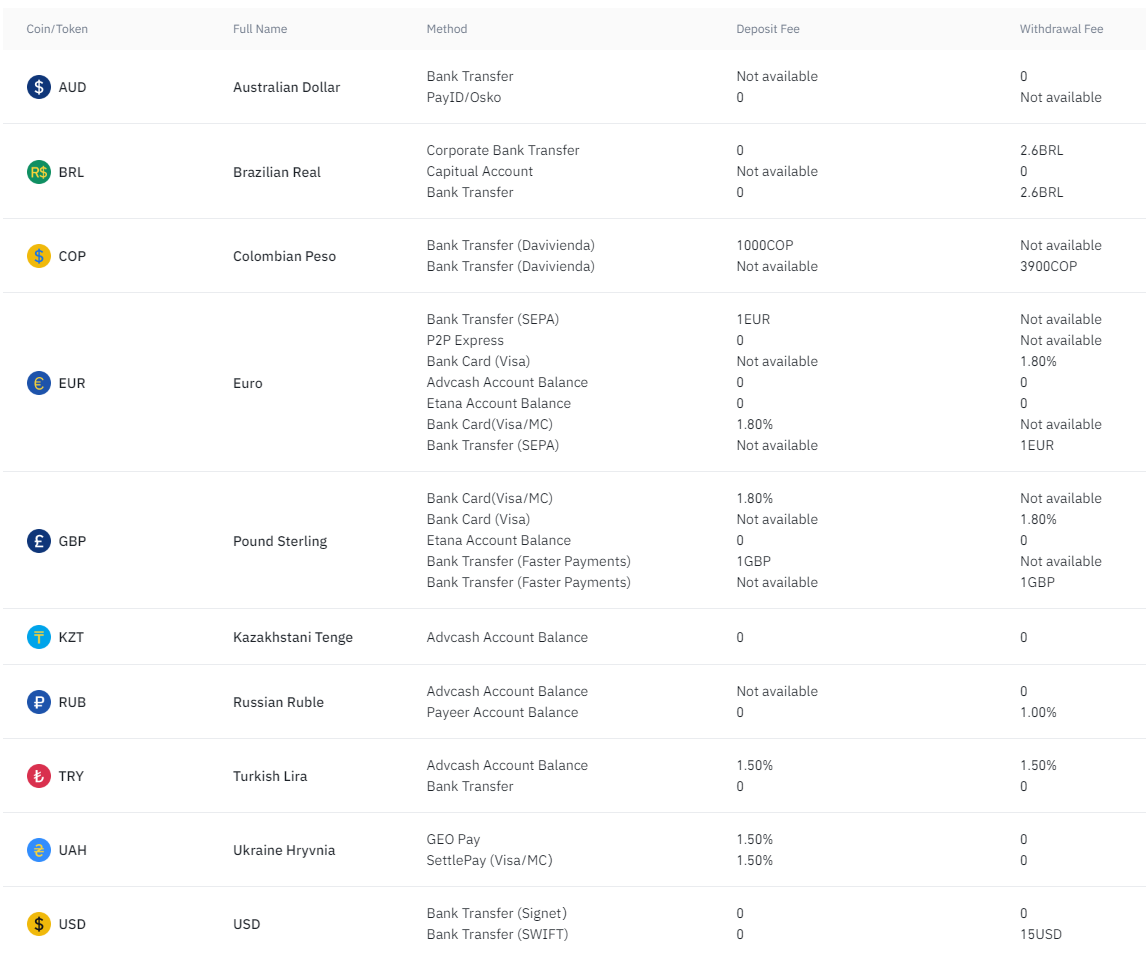
Binance charges no fees for users who wish to deposit crypto into the exchange. The charge for depositing fiat cash into Binance will vary based on the deposit method and the currency. Here is a list of fiat currencies and their deposit method.
Binance Withdrawal Fees
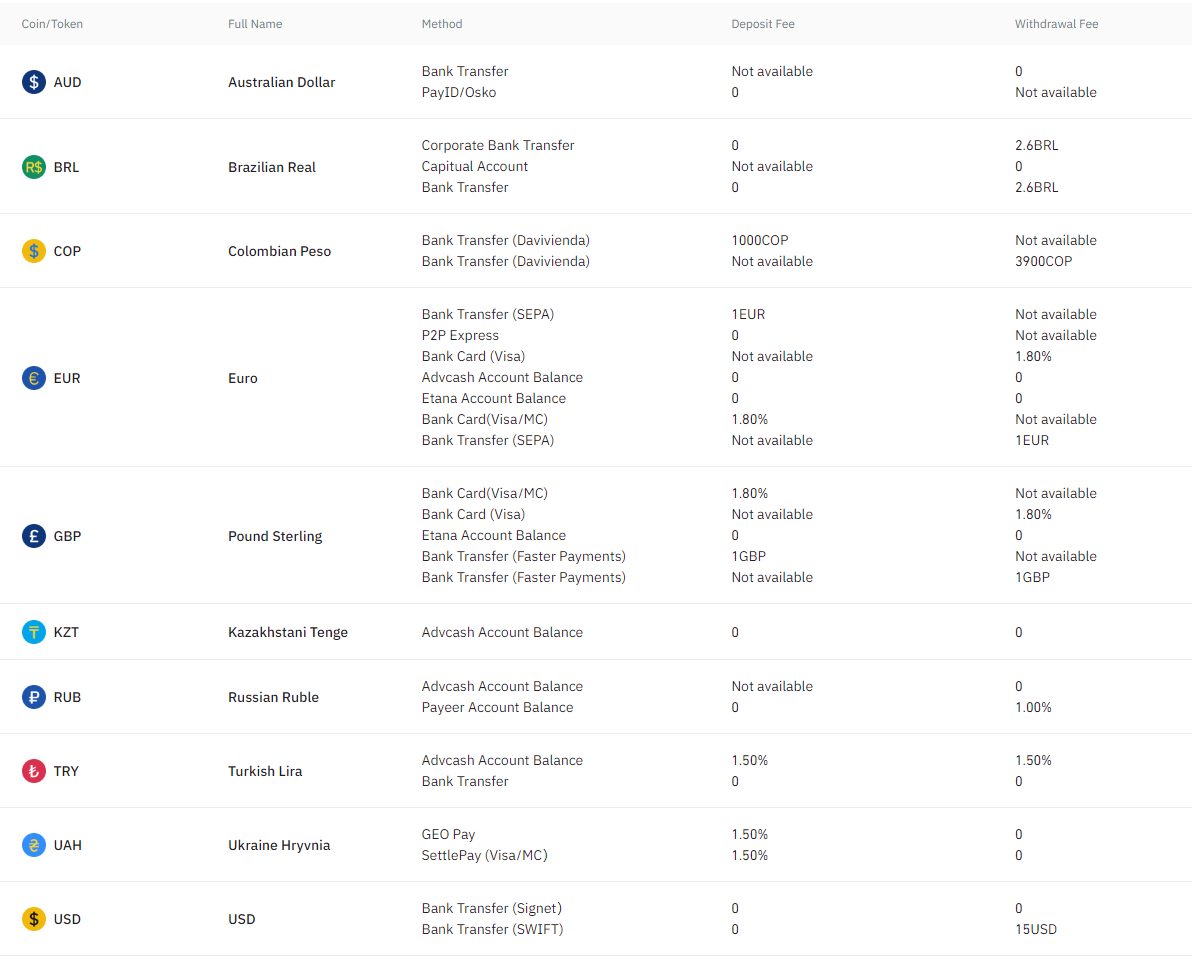
When withdrawing crypto from your Binance account, a fixed fee is charged to cover the transaction fees associated with sending the cryptocurrency to your wallet. The cost varies for each coin; you can view the exact amount by clicking here.
The charge associated with fiat currency withdrawals varies by withdrawal method and currency. For example, it is free to withdraw Australian Dollars (AUD) by bank transfer. Bankcard withdrawals of Pound Sterling (GBP) carry a 1% charge. Here is the complete list:
Binance Transaction Fees
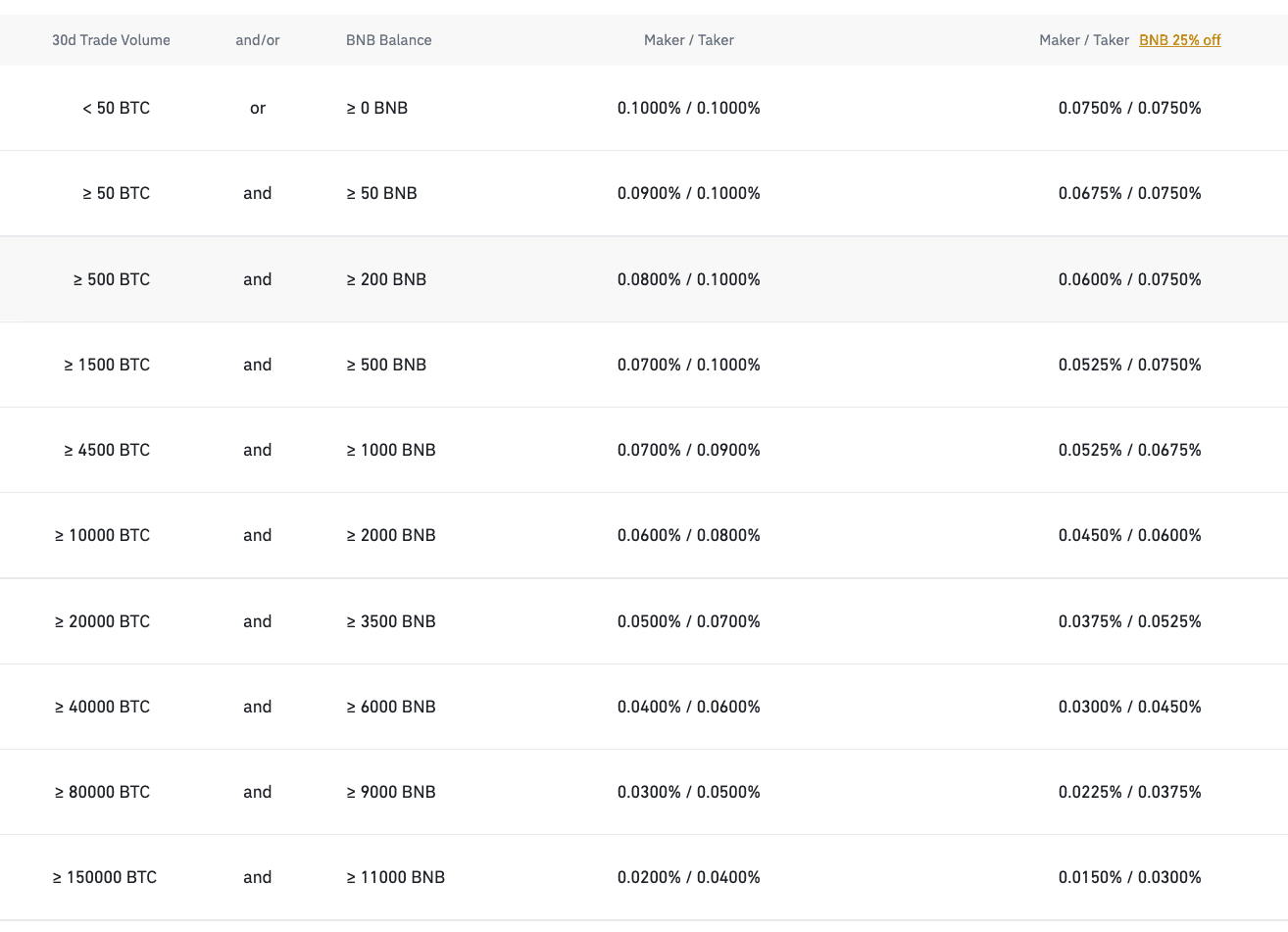
Binance fees for spot trading (buying and selling cryptocurrency) begin at 0.1 %, and you may receive a 25% discount if you pay with Binance’s native token (BNB). This indicates that customers pay only 0.075% on every trade!
If you are a high-volume trader and hold a significant amount of BNB, you may lower your expenses to 0.015% maker fee and 0.03% taker fee and include the 25 % discount for using BNB to pay for transactions.
Binance Security
Binance is one of the safest cryptocurrency exchanges that stores most of its digital assets offline in cold storage. Binance has security features like 2FA (two-factor authentication), whitelisting devices, controlling withdrawal addresses, and anti-phishing codes. The exchange even uses U2F (universal 2nd-factor authentication), which necessitates physical access to hardware in order to access an account.
Despite their best efforts to remain secure, Binance suffered a cybersecurity attack in 2019 that resulted in the loss of over $40 million in Bitcoins. Binance’s had an excellent response to the incident; they covered the damage fully, ensuring that their users suffered no losses.
4 months after this incident, Binance was able to pass a security audit and received the ISO 27001 accreditation for its information security management. This demonstrates Binance’s dedication to keeping a secure platform for its clients. Today, Binance invests continuously in measures to strengthen its cybersecurity protection.
Supported Countries
Binance does not officially state which countries are serviced by their exchange. It is available in every country with a few exceptions.
Following the withdrawal of Binance’s primary service from the United States, customers in the country can now use Binance US. Binance US was established in 2019 after the U.S. Department of Financial Services flagged the platform for potential violations of New York’s virtual currency legislation.
Although Binance does not specify which countries are blocked, clients have rumors that Binance has closed accounts for people residing in Iran and Serbia.
Customer Support and Reviews
Binance has been a massive success in its short existence. It has a lot to offer, and many traders are pleased about its services. The combination of low fees, a fast exchange, and developers with a proven track record makes most Binance users happy.
The FAQ section of Binance’s support website has excellent information to help you with any issues you face.
Automated bots are also available in the FAQ area to answer your question or solve your problem. Alternatively, you may also request to speak with a customer support agent via live chat.
The Binance Help Desk Twitter account or the Binance Support Thread on Reddit can be contacted using your case I.D. If you have already submitted a support ticket with them. Due to the high number of cases received, you should be prepared to wait a while for a response.
Complaints concerning Binance’s live chat service and verification techniques have increased since they implemented a mandatory identity verification policy earlier this year.
The “live chat” service appears to require excessively long wait durations of up to 12 hours, in many cases without successful help or resolution of authentication difficulties.
It’s unclear if this is a temporary problem caused by high traffic or a problem that Binance users will have to deal with for a long time. The exchange has also had difficulties with erroneous two-factor authentication in the past. However, this looks less of a problem now.
Binance vs. Other Exchanges
Binance vs Coinbase (Pro)
Coinbase Pro is the trading platform for Coinbase. It is one of the most prominent exchanges regarding reputation and popularity. In addition to the platform’s restricted global availability (only 103 countries are supported), the platform costs begin at 0.6%, which is six times more than the highest trading fee tier on Binance.
Binance vs Bittrex
Bittrex is a cryptocurrency exchange in the United States that has increased in popularity among traders since its launch in December 2014. It has become one of the most popular cryptocurrency exchanges on the market due to its consistent growth. Bittrex fees begin at 0.35%, which is 3.5 times higher than Binance. The exchange provides around 330 cryptocurrencies, more than most exchanges but still fewer than Binance.
Binance vs Bitfinex
Bitfinex is one of the world’s largest cryptocurrency exchanges by volume. It provides advanced trading options such as Bitcoin margin trading. Bitfinex supports more than 150 coins and tokens, substantially less than Binance, which accepts more than 600.
Bitfinex has a maker/taker fee structure. Maker orders, which bring liquidity to the exchange, incur a maximum trading fee of 0.1% (similar to Binance). Taker orders, which remove liquidity from the exchange, incur a maximum cost of 0.2% (twice that of Binance). Similar to Binance, trading fees on Bitfinex decrease as trade volume grows.
Binance vs Kraken
Kraken offers about 110 different cryptocurrencies, far fewer than Binance’s 600+.
Kraken Pro, like Bitfinex, has a maker-taker fee structure. The maximum charge for makers is 0.16%, while the maximum cost for takers is 0.26%. In both instances, Binance has lower fees.
Conclusion
While Binance is the world’s largest crypto exchange, the constant investigations and the extensive list of nations that have banned its services are grounds for alarm. Additionally, its platform with advanced features may be too complex for new investors to use.
However, if you’re one of the advanced users who like to have a large selection of coins to choose from, Binance may be the perfect choice for you. Crypto traders based in the U.S. can also use the platform through Binance US, but it supports fewer cryptocurrencies than the global platform. Make sure to do your due diligence and compare trading platforms before getting started with Binance.
FAQs
Is Binance better than Coinbase?
When compared to Coinbase, Binance is the better crypto exchange. Binance offers cheaper fees, a much wider selection of supported assets and it’s available in 170 countries (Coinbase is available in 103 countries.
Is Binance trustworthy?
Binance is considered a trustworthy exchange that provides user account safety through the usage of Two Factor Authentication (2FA). Despite getting hacked on May 7, 2019, resulting in the theft of 7000 Bitcoins from the exchange, Binance is still considered a safe exchange.
Is Binance a Chinese company?
Binance was founded in China but eventually relocated its headquarters out of the country due to the Chinese government’s increased control of cryptocurrencies.
Are Binance fees high?
Binance fees are some of the lowest in the industry.
Is Binance a scam?
No Binance is not a scam, it is considered a trustworthy cryptocurrency exchange.
What are the pros and cons of Binance?
Pros of Binance
- Low trading fees: Binance has low trading fees, traders can keep more of their gains after
- Over 600 digital assets are supported: Over 600 coins are available for Binance’s international users.
- Cater to different trading styles: Binance offers many different trading options and order types, such as peer-to-peer trading, spot trading, and margin trading.
Cons of Binance
- Complex platform interface: The wide selection of trading features may be daunting. Even advanced traders get overwhelmed.
- U.S. version of Binance has more limitations: Binance U.S. only has 90 cryptocurrencies available for trading and accessible in 44 states.
How does Binance make money?
Binance makes money via trading fees as well as charging interests on margin trading, futures trading, and cross collaterals. The asset being traded, the customer’s VIP status, monthly trading volume, and average holding determine the majority of these costs.

